My Dog Ate Xylitol Gum — How Dangerous Is It? | Dogs Calculator
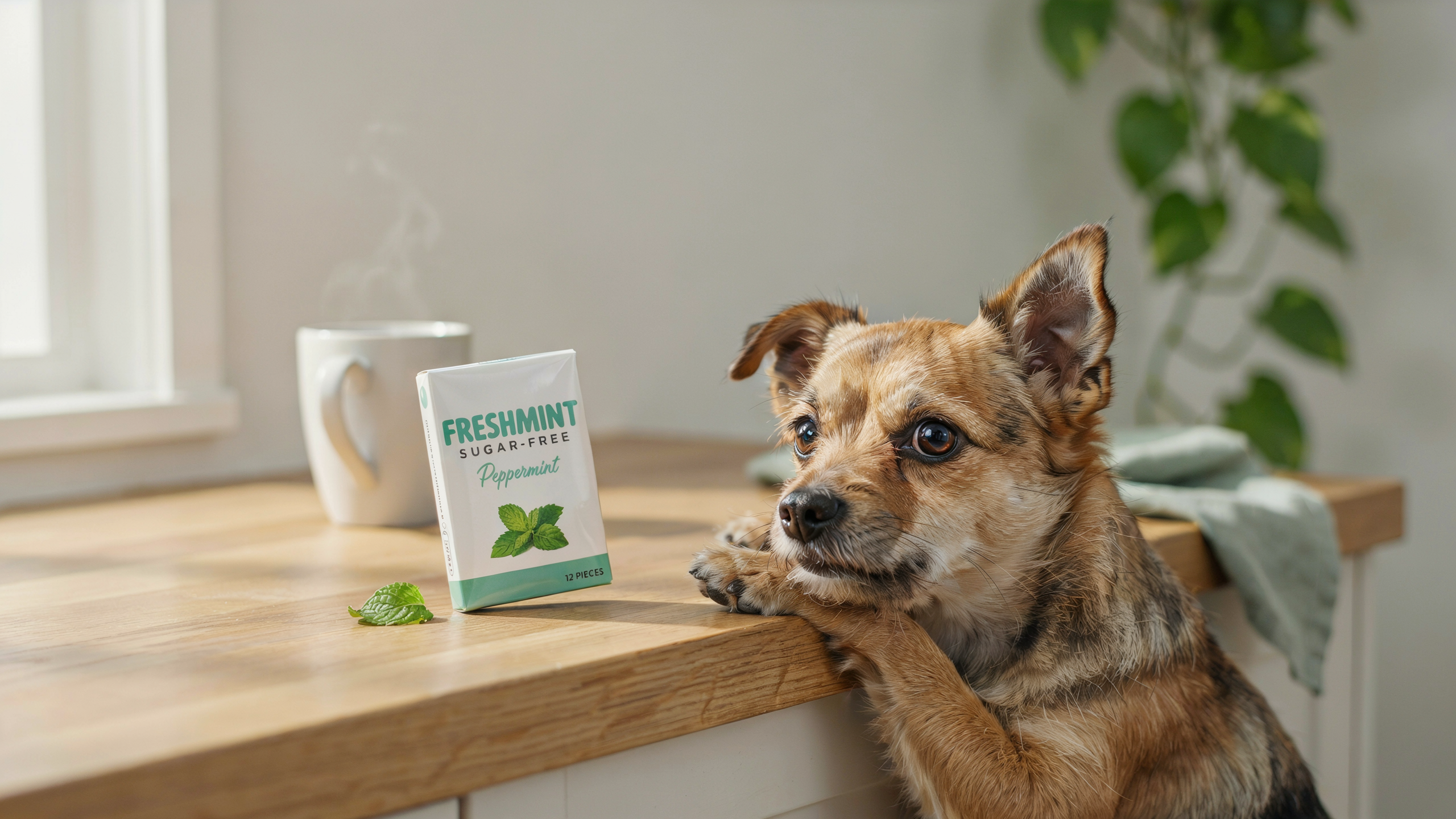
You turn around for a second and your dog has chewed through a pack of sugar-free
gum. It happens faster than you'd expect, and the panic that follows is completely justified xylitol, the sweetener used in most sugar-free gum brands, is one of the most acutely toxic substances a dog can encounter in an ordinary household.
Unlike chocolate, where the risk scales gradually with amount and breed size, xylitol can cause a life-threatening drop in blood sugar within 30 minutes. The number of pieces matters enormously here and that number is lower than most people realize. Here's what you need to know, and what to do right now.
Why Is Xylitol So Dangerous for Dogs?
Xylitol is a sugar alcohol used as a low-calorie sweetener. For humans, it's completely harmless it's actually used in some dental products because it fights tooth decay. For dogs, the biology is entirely different.
When a dog eats xylitol, their pancreas mistakes it for real sugar and releases a massive surge of insulin three to seven times the normal amount. That insulin spike causes blood glucose to plummet rapidly, a condition called hypoglycemia. Without treatment, severe hypoglycemia leads to seizures, brain damage, and death.
At higher doses, the problem goes beyond blood sugar. According to the Merck Veterinary Manual, xylitol can cause direct destruction of liver tissue hepatic necrosis developing within 8 to 12 hours of ingestion and potentially progressing to acute liver failure even if the initial hypoglycemia was treated.
The Pet Poison Helpline ranks xylitol among the top three most-reported dog toxicities, behind only chocolate and grapes and unlike those two, xylitol can reach a dangerous dose from just one or two pieces of the wrong brand of gum.
How Many Pieces of Gum Are Actually Dangerous?
This is the question that matters most, and the honest answer is: it depends entirely on the brand.
Different gum brands contain wildly different amounts of xylitol per piece anywhere from less than 0.01 grams to over 1 gram per piece. According to the ASPCA Animal Poison Control Center and Pet Poison Helpline, the thresholds that matter are:
- Hypoglycemia risk: 0.1 g of xylitol per kg of dog's body weight
- Liver failure risk: 0.5 g of xylitol per kg of dog's body weight
What does that mean in practice? With a high-xylitol brand (around 1g per piece):
- A 10 lb (4.5 kg) dog hits the hypoglycemia threshold at just 1 piece
- A 50 lb (22 kg) dog hits the hypoglycemia threshold at around 2–3 pieces
With a lower-xylitol brand (around 0.009g per piece), the same dog would need to eat many dozens of pieces to reach the same threshold but you can't know that without checking the label.
The takeaway: unless you can confirm the exact xylitol content per piece from the product label and calculate it against your dog's weight, treat any xylitol gum ingestion as a potential emergency. Do not wait for symptoms to appear.
Symptoms of Xylitol Poisoning in Dogs
Because xylitol triggers a rapid insulin release, symptoms can develop frighteningly fast sometimes within 10 to 30 minutes. In some gum products where absorption is slower, onset may be delayed up to 12 to 18 hours, but early action is always the right call regardless.
Early Symptoms (Hypoglycemia Can Appear Within 30 Minutes)
- Vomiting (often the first sign)
- Weakness or sudden lethargy
- Wobbling or difficulty walking (ataxia)
- Disorientation or glassy-eyed appearance
- Trembling
Serious Symptoms (Severe Hypoglycemia or Liver Involvement)
- Seizures
- Collapse
- Jaundice (yellowing of eyes or gums) indicates liver damage
- Abnormal bleeding or bruising a sign of liver failure affecting clotting
- Coma
If your dog is showing any of these signs, don't read further call a vet or go to an emergency clinic right now.
What to Do Immediately
Step 1 Check the label right away
Grab the gum package and look for xylitol in the ingredient list. Note the xylitol content per piece if listed, or the total sugar alcohol content per piece if xylitol isn't broken out separately. Also note the brand, flavor, and how many pieces are missing from the pack.
Step 2 Note your dog's weight and the timing
When did this happen, as accurately as you can estimate? What does your dog weigh? These two pieces of information are what your vet or poison control will ask for first.
Step 3 Call immediately don't wait for symptoms
This is not a "watch and wait" situation. Xylitol poisoning progresses quickly and the window for effective decontamination closes fast:
- ASPCA Animal Poison Control: +1 (888) 426-4435 aspca.org/pet-care/animal-poison-control
- Pet Poison Helpline: +1 (855) 764-7661 petpoisonhelpline.com
- Your own vet or nearest emergency clinic
Step 4 Do NOT induce vomiting without vet guidance
This is one of the most important things to get right. If your dog is already showing signs of hypoglycemia weakness, disorientation, trembling inducing vomiting can make things significantly worse. According to the Merck Veterinary Manual, emesis should only be attempted in dogs that are still clinically normal, and ideally under veterinary supervision. Let the professional you call make that call.
Step 5 Do NOT give activated charcoal
Unlike some other toxins, activated charcoal does not bind to xylitol effectively and is not recommended. Mentioning this to your vet if they seem uncertain is not overstepping it's helpful information.
Step 6 Get to the vet
Even if your dog seems fine at the moment, go. Hypoglycemia can develop silently and quickly, and early IV dextrose and blood glucose monitoring are far more effective than treating a crashed dog.
Hidden Sources of Xylitol Beyond Gum
Gum is the most common culprit, but xylitol shows up in a surprising number of everyday products. It's worth doing a sweep of your home:
- Peanut butter some brands use xylitol as a sweetener; always check the label before giving your dog peanut butter as a treat
- Sugar-free candy and mints
- Toothpaste and mouthwash human dental products frequently contain xylitol
- Chewable vitamins and supplements especially children's multivitamins
- Sugar-free baked goods
- Cough syrups and liquid medications
- Some ice creams and flavored drinks
If you use xylitol-containing toothpaste, don't let your dog lick the sink or share your toothbrush.
How Vets Treat Xylitol Poisoning
Treatment depends on how much was consumed and when:
- Early/caught quickly: inducing vomiting (only if the dog is still normal and the vet authorizes it) to prevent further absorption
- IV dextrose: to rapidly restore blood glucose if hypoglycemia has set in
- Blood glucose monitoring: checked repeatedly over hours, since levels can drop again after initial treatment
- Liver enzyme monitoring: at higher doses, baseline liver values are checked and repeated over days to catch hepatic damage early
- Liver protectants (such as N-acetylcysteine or SAMe): used when liver involvement is suspected
- Hospitalization: often 24–48 hours or longer for higher-dose ingestions
Prognosis is good for dogs that receive prompt treatment before severe hypoglycemia or liver failure develops. Dogs who don't get treatment in time, or who ingest a very large dose, face a much more serious outcome.
Other Toxic Foods Worth Knowing About
If you're dog-proofing your home after a scare like this, these are the other high-priority hazards to be aware of:
- Grapes and raisins can cause sudden kidney failure, and no safe dose has been established (Grape Toxicity Guide)
- Chocolate contains theobromine, risk varies by type and dog size (Chocolate Toxicity Calculator)
- Nutmeg contains myristicin, can cause neurological symptoms in larger amounts (Nutmeg Toxicity Guide)
- Onions and garlic damage red blood cells with repeated exposure
Browse all of our free dog health calculators for practical, weight-based tools to help you assess risk quickly when something goes wrong.
Frequently Asked Questions
Q: My dog ate one piece of sugar-free gum. Should I go to the vet?
Yes, call your vet or poison control right away even one piece. Xylitol content per piece varies enormously by brand, and some high-xylitol gums can reach a dangerous dose in a single piece for small dogs. Don't wait for symptoms.
Q: How fast does xylitol poisoning happen?
Hypoglycemia can develop within 10 to 30 minutes with some products, or up to 12 to 18 hours with gum types that are absorbed more slowly. Either way, early action is always safer than waiting to see.
Q: Is xylitol in regular (non-sugar-free) gum?
Generally no regular gum uses sugar, not xylitol. The risk is specifically with sugar-free, "no sugar added," or "diabetic-friendly" products.
Q: Can I give my dog honey or corn syrup at home to help?
Only if a vet specifically instructs you to AND your dog is still conscious and able to swallow safely. Rubbing a small amount of corn syrup on the gums can help stabilize blood sugar during transport to the vet, but this is not a substitute for veterinary care.
Q: What if my dog seems totally fine after eating xylitol?
Still call your vet or poison control. Some gum products absorb slowly, meaning symptoms can be delayed by up to 12–18 hours. "Fine right now" does not rule out poisoning.
Q: Is xylitol safe for cats?
Current evidence suggests cats are much less susceptible to xylitol toxicity than dogs, though the research is limited. It's still not something you'd want your cat to eat, but the acute danger is specifically a dog concern.
Q: My dog ate xylitol-containing toothpaste. Is that an emergency?
The amount of xylitol in a typical toothpaste tube is usually low, but call poison control to confirm that the xylitol concentration varies by brand, and small dogs are more vulnerable.
Q: Does activated charcoal help with xylitol poisoning?
No. According to the Merck Veterinary Manual, activated charcoal does not effectively bind xylitol and is not recommended as treatment.
This article is for informational purposes only and does not constitute veterinary advice. Always consult a licensed veterinarian for medical decisions regarding your pet.