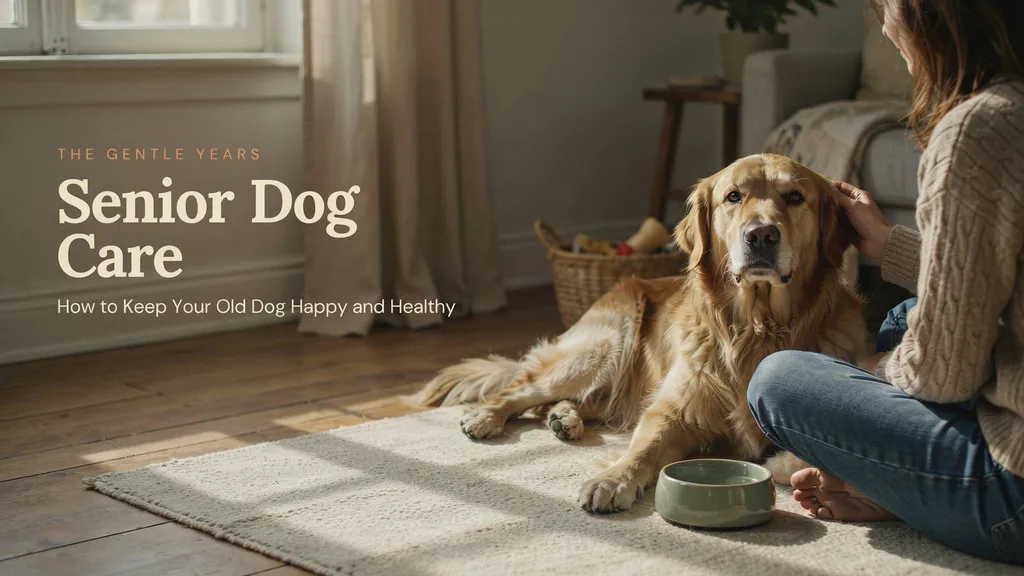
Senior Dog Care: How to Keep Your Old Dog Happy and Healthy
Overview
Many dogs are considered “senior” around 7 years old, but the exact timing depends on size and breed. Large dogs often age sooner than small dogs. Senior care focuses on comfort, mobility, nutrition, and early detection of common age-related conditions.
When is a dog considered senior?
A helpful guideline:
- Small breeds: often senior around 8–10 years
- Medium breeds: around 7–9 years
- Large/giant breeds: around 6–8 years
Treat “senior” as a prompt to monitor more closely, not as a label that limits your dog’s joy.
Changes to expect
Physical
- Stiffness after rest
- Slower rising or reluctance to jump
- Weight gain or muscle loss
- Cloudy eyes or hearing changes
Behavioral
- More sleep
- Anxiety or restlessness at night
- Reduced tolerance for high-energy play
Diet changes for senior dogs
Goals:
- Maintain lean muscle (quality protein)
- Prevent weight gain (adjust calories)
- Support joints (omega-3s)
Tips:
- Measure food carefully
- Use lower-calorie treats
- Consider wet food if dental pain affects chewing
Exercise dos and don’ts
Do
- Short, frequent walks
- Gentle strengthening (controlled sit-to-stand)
- Swimming if available
Don’t
- Sudden intense workouts
- Long runs in hot weather
- High jumps if arthritis is present
If limping or pain appears, reduce intensity and get a vet evaluation. Pain management can dramatically improve quality of life.
Common senior dog health conditions
- Arthritis
- Dental disease
- Kidney disease
- Heart disease
- Cognitive dysfunction (dog dementia)
- Endocrine issues (thyroid, diabetes)
Supplements that may help
Discuss with your vet:
- Omega-3 fish oil
- Joint support supplements (glucosamine/chondroitin)
- Dental chews (with supervision)
Supplements work best when paired with weight control and appropriate exercise.
Quality of life assessment
Track:
- Appetite and hydration
- Mobility (stairs, getting up)
- Interest in favorite activities
- Sleep quality
- Pain signs (panting, pacing, hiding)
A simple weekly score can reveal trends early.
End of life planning
It’s hard, but planning reduces stress later:
- Choose a trusted veterinarian
- Understand palliative care options
- Consider an at-home visit plan if available
- Discuss family expectations and comfort goals
Key takeaway
Senior care is about small, consistent adjustments: gentle movement, smart nutrition, and proactive vet checks that keep your dog comfortable and engaged.